

Introduction
By 2026, businesses are no longer asking if AI will change work — they are deciding how to manage digital employees.
Digital employees are AI-powered workers that perform specific roles inside companies. They don’t replace humans entirely, but they handle tasks that once required full-time staff. This shift is transforming productivity, team structures, and the very definition of a workforce.
1. What Are Digital Employees?
Digital employees are AI systems designed to perform job-specific functions such as:
- Customer support agents
- Sales assistants
- Data analysts
- Operations coordinators
- Marketing executors
They follow workflows, learn from data, and operate continuously under human-defined rules.
Unlike traditional software, they adapt, decide, and improve over time.
2. Why Digital Employees Are Scaling in 2026
Several factors have accelerated their adoption:
- Rising labor costs
- Global competition
- Demand for 24/7 operations
- Improvements in AI reasoning and memory
- Better integration with business tools
Digital employees allow companies to scale output without scaling headcount.
3. How Businesses Are Using Them
In 2026, companies deploy digital employees to:
- Respond to customer queries instantly
- Qualify leads and schedule sales calls
- Generate reports and insights automatically
- Manage internal workflows
- Monitor performance metrics in real time
This reduces delays and removes repetitive workload from human teams.
4. Human Roles Are Becoming More Strategic
As digital employees take over execution, human workers shift toward:
- Strategic planning
- Creative problem-solving
- Relationship management
- Ethics and oversight
- High-impact decision-making
Work becomes less about repetition and more about thinking.
5. Productivity Without Burnout
One of the biggest advantages is sustainability.
Digital employees:
- Don’t burn out
- Don’t need time off
- Don’t lose focus
- Don’t require constant supervision
This allows companies to maintain high performance without exhausting human teams.
6. Challenges and Responsibility
The rise of digital employees also introduces challenges:
- Over-reliance on automation
- Loss of transparency in decisions
- Data privacy risks
- Skill gaps for human workers
Successful companies address this by:
- Keeping humans in control
- Auditing AI decisions regularly
- Training teams to work alongside AI
- Setting ethical boundaries

7. The New Workforce Model
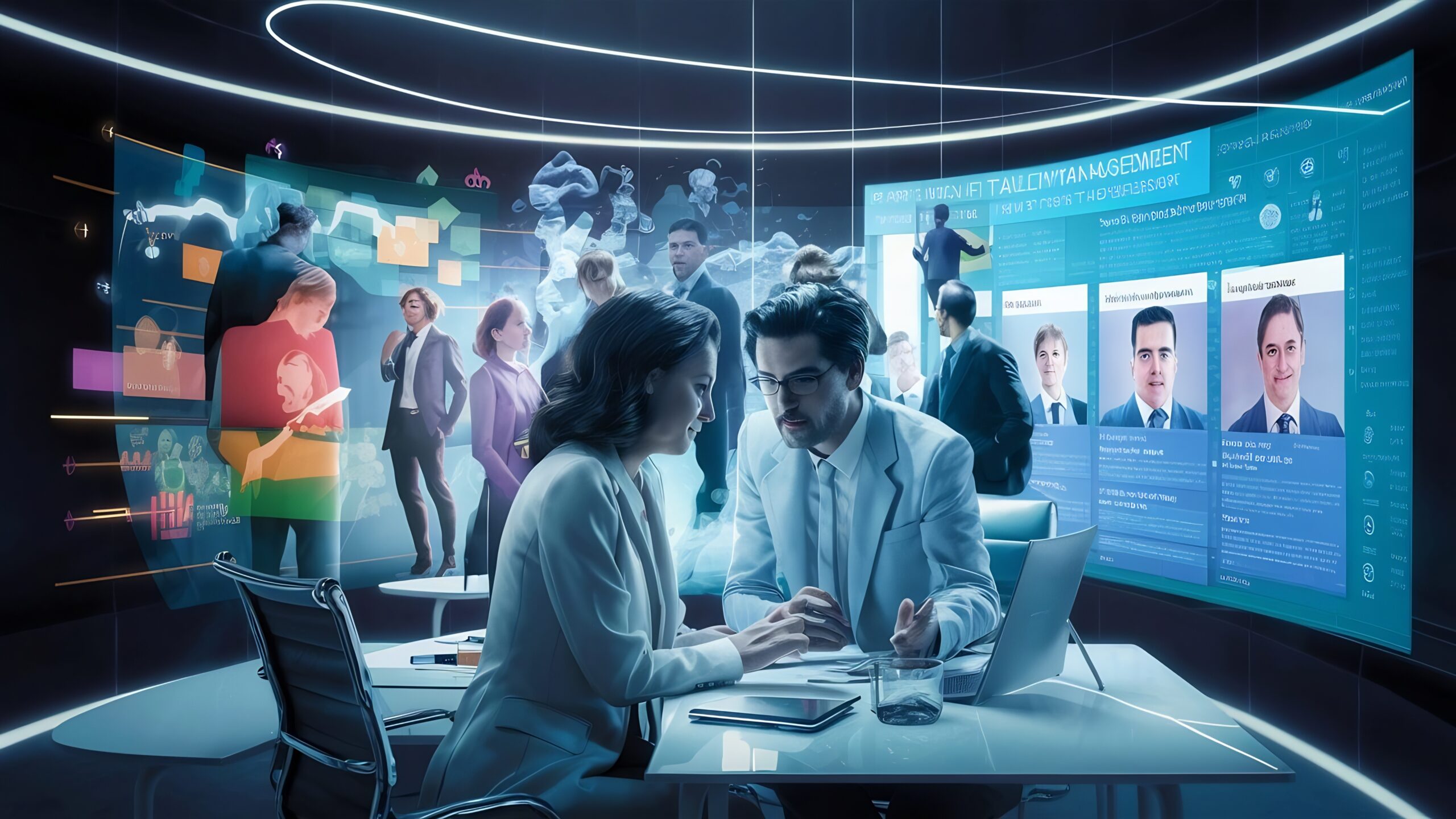
By 2026, companies operate with hybrid teams:
Human employees + Digital employees
This model increases speed, accuracy, and scalability while preserving human judgment and creativity.
Conclusion
Digital employees are not a futuristic idea — they are an operational reality in 2026.
Businesses that learn how to integrate AI workers responsibly will gain a massive advantage in efficiency, innovation, and resilience.
The future of work is not human versus AI —
it is human intelligence amplified by digital employees.